Hurricane season is here, and while we prepare our homes and families, it’s just as important to have a plan for our pets. In Puerto Rico, we can’t just evacuate to another state, so being prepared is essential for riding out the storm safely with our furry family members.
Here are some steps you can take now to protect your pets before, during, and after a hurricane:
Create a Pet Emergency Kit
Put together a bag or container with the following items:
At least 5–7 days of food and water
Bowls for food and water
Medications and a copy of prescriptions
A leash, collar with ID tags, and harness
Pet first aid kit (bandages, antiseptic wipes, tweezers, gloves)
Waste bags or litter and a small litter box
Comfort items (a blanket, toy, or an item that smells like you)
Recent photo of your pet (in case you’re separated)
Vaccination records and other information
Have a Safe Space Ready
Choose a room in your home that’s away from windows and easy to clean. If flooding is a concern, keep your pet in a crate or carrier raised off the floor. Make sure your pet feels comfortable in this area well before a storm hits.
Keep Pets Indoors During Storms
Pets can panic during loud winds or thunder, and may run away if they’re scared. Never leave your pet outside during a storm. Keep them inside with you where it’s safer and quieter.
Power Outages and Heat
If the power goes out (and let’s be honest: it will in Puerto Rico), the heat can rise quickly. Keep fresh water available, open windows for airflow (when safe), and limit activity. Cooling mats or damp towels can help keep pets cool.
Make Sure Your Pet Can Be Identified
We cannot stress this enough. So many pets get lost while not wearing an ID tag. If your pet does not have tags, just write your phone number on their collar with a permanent marker. Cover it with clear tape for extra protection.
Know Where You Can Go if You Need to Leave Home
If your home becomes unsafe:
Know which friends, family, or local shelters might allow pets.
Keep a list of pet-friendly hotels in your area (some may waive pet restrictions during disasters).
If public shelters are opened, listen to local emergency announcements about whether they will accept pets.
Stay Calm for Your Pets
Pets pick up on your stress. The more prepared you are, the more secure your pet will feel. Comfort them with your presence, gentle touch, and familiar routines as much as possible.
Being ready can save lives—yours and your pet’s. Hurricanes are unpredictable, but your response doesn’t have to be. Start preparing now, and you’ll be giving your pet the best chance of staying safe no matter what the season brings.
Summer is a time for fun in the sun, but the heat can be dangerous for our furry friends. As temperatures rise, it’s important to take extra precautions to ensure your pets stay cool, comfortable, and safe.
Here are some essential tips for keeping your pets safe during hot weather:
🐾 Provide Plenty of Fresh Water Pets can become dehydrated quickly in the heat, so make sure they always have access to clean, fresh water. Consider adding ice cubes to their water bowl or using a pet-friendly water fountain to keep it cool and appealing.
🐾 Never Leave Pets in a Parked Car Even with the windows cracked, a parked car can quickly become a deadly oven. If you need to run errands, leave your pets at home where they’ll be safe and cool.
🐾 Limit Outdoor Activity Try to walk your pets during the cooler hours of the morning or evening. Avoid hot pavement, which can burn sensitive paw pads. If the ground is too hot for your hand, it’s too hot for your pet’s paws!
🐾 Create Shade and Airflow If your pets spend time outdoors, make sure they have access to shade and ventilation. Shade structures, cooling mats, and fans can help them beat the heat. Better yet, bring them indoors to enjoy the air conditioning.
🐾 Watch for Signs of Heatstroke Signs of overheating in pets include excessive panting, drooling, rapid heartbeat, weakness, vomiting, and even collapse. If you notice these symptoms, move your pet to a cooler area immediately and contact your veterinarian.
🐾 Grooming Can Help Regular grooming can help prevent heat-related issues by removing excess fur that can trap heat. However, avoid shaving your pet too short, as their fur also provides protection from the sun.
Remember, our pets depend on us to keep them safe. With a little extra care and attention, you and your furry friends can enjoy a happy, healthy summer together!
Stay cool, and give your pets a little extra love during these hot days. 🐶🐱❤️
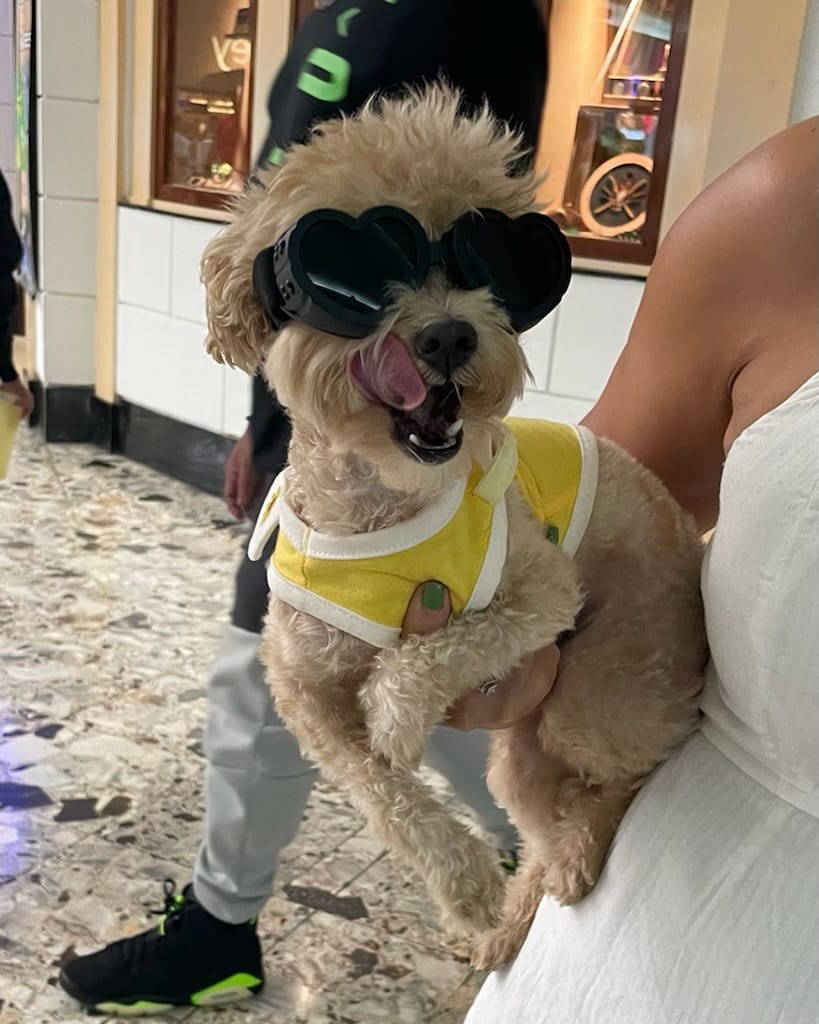
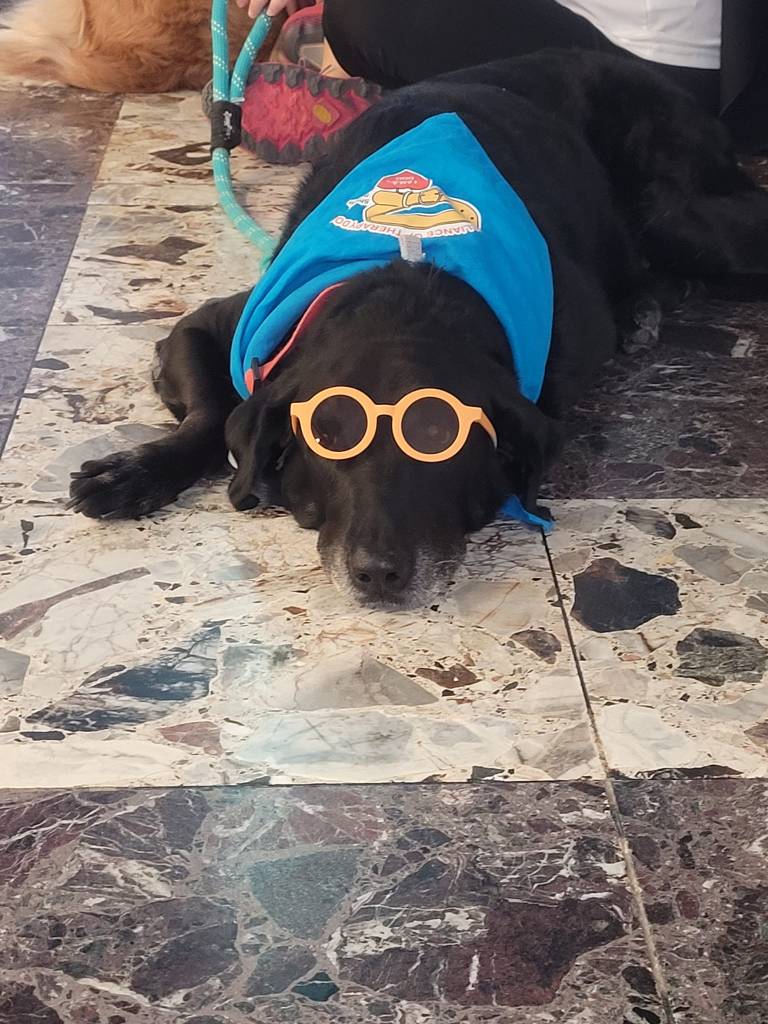
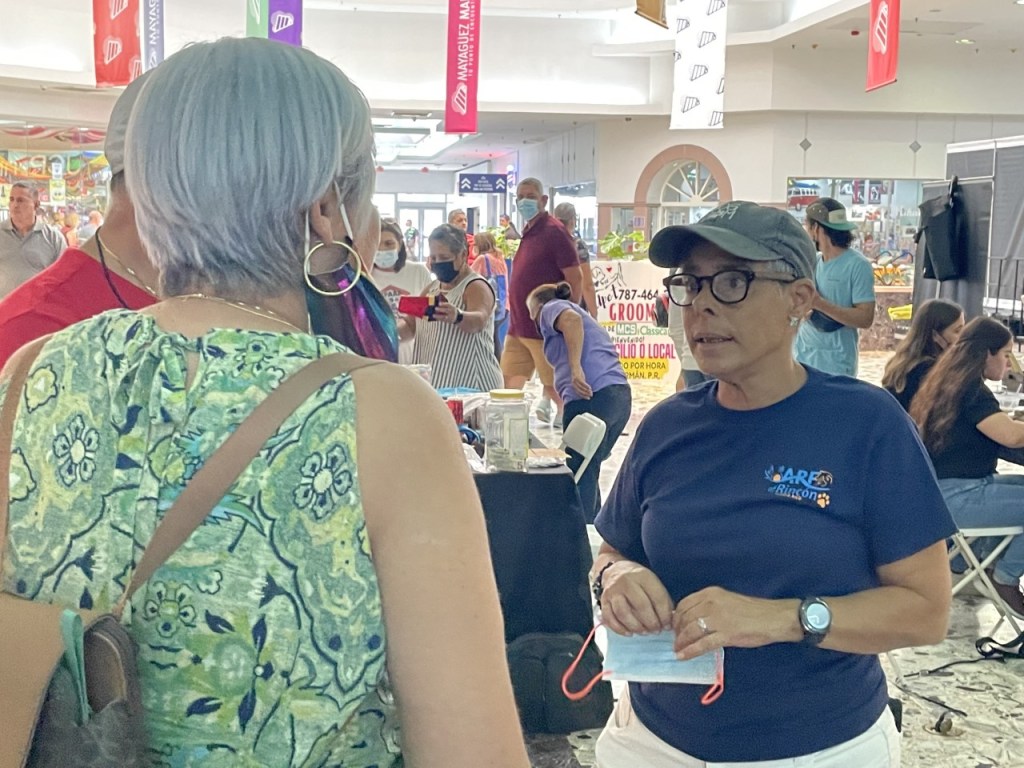
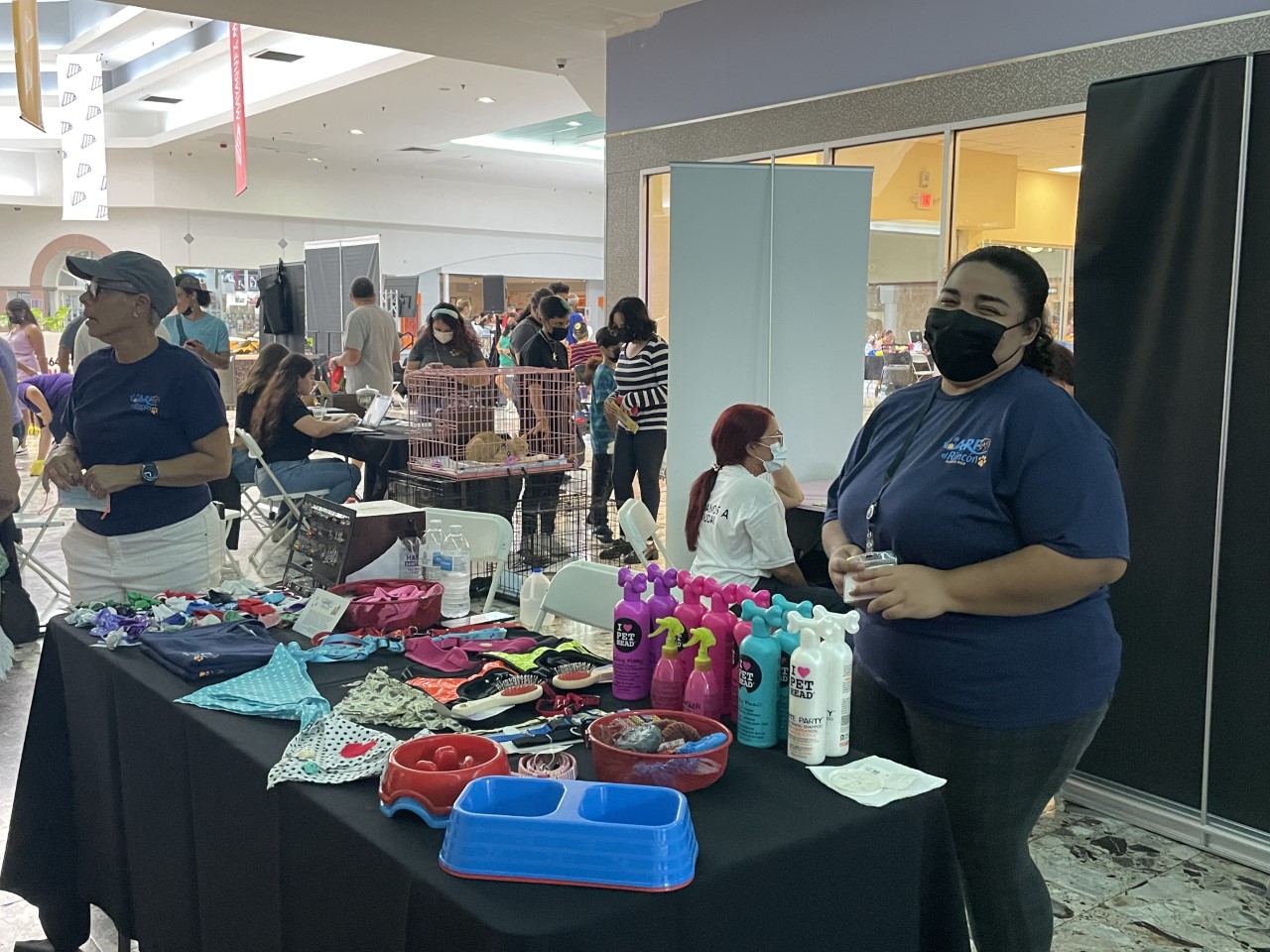
On Saturday, August 27th, the Pet Fair took place in Mayagüez Mall, and ARF of RIncón, along with other rescue organizations, were part of this wonderful event. The organizers brought veterinaries who administered vaccines for both dogs and cats and other services such as nail trims and ear cleanses. But perhaps the best part was watching all the wonderful pets that people brought, and here are some of our favorites!
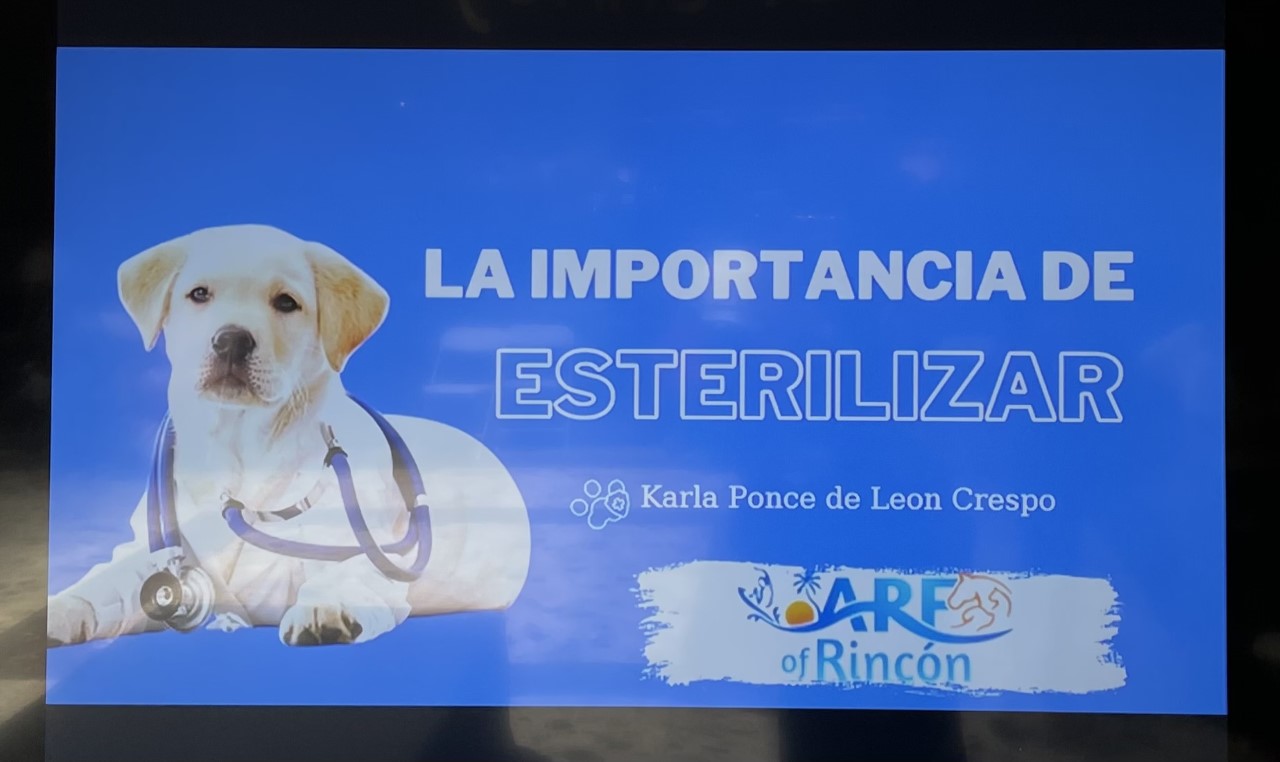
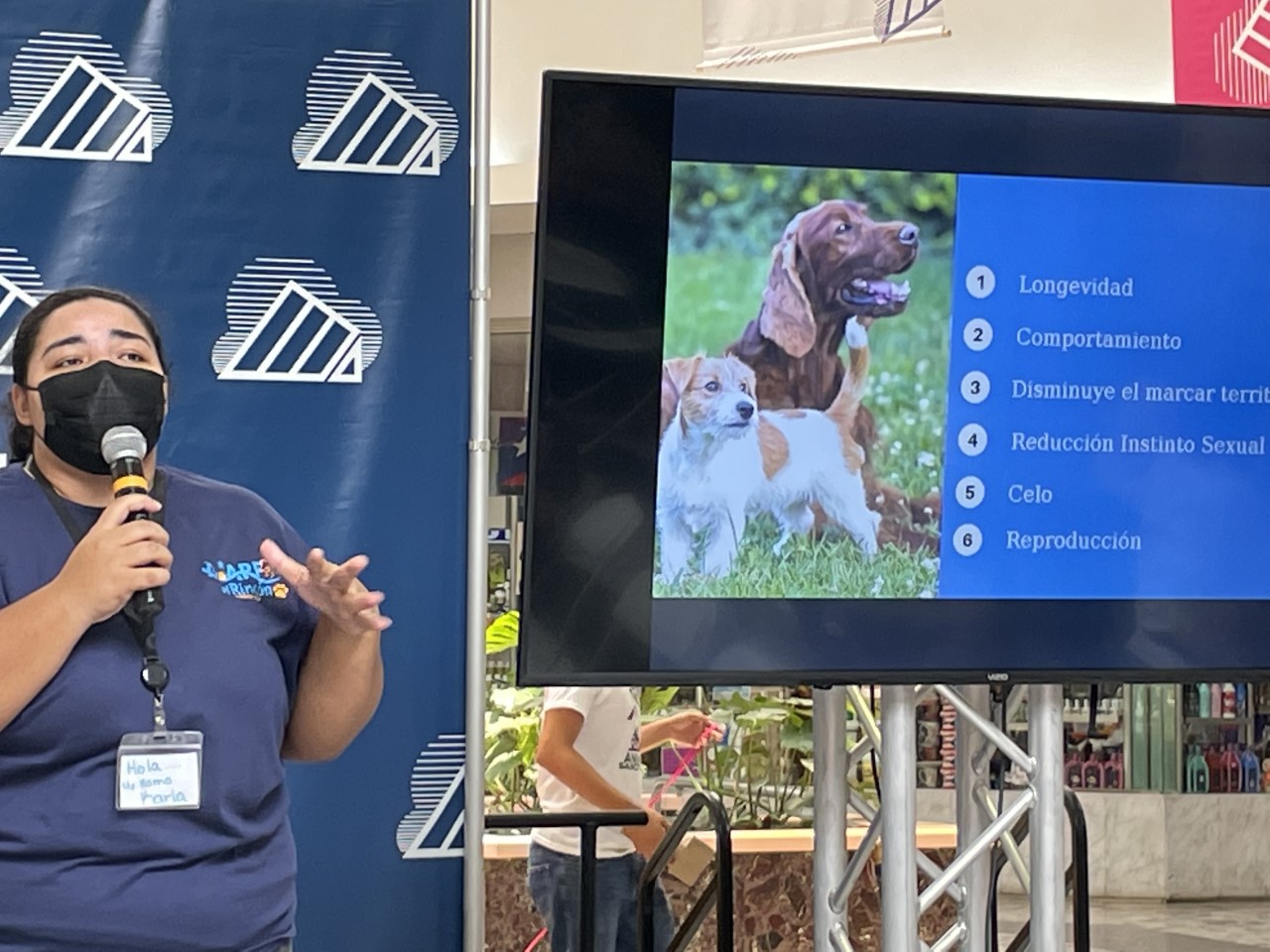
ARF of Rincón was able to offer a presentation on the importance of sterilizing your pet. This presentation was offered by Karla Ponce de León, our new Public Relations Officer, who did an amazing job in delivering the message.
We are grateful for the opportunity to be part of this experience. Let’s hope for more of these events in the future. And do not forget to spay or neuter your pets!
Note: This story was written in October 2017 but was never published until now, the four-year anniversary of Hurricane María.
There are so many stories about Hurricane María. Families losing their houses, others evacuating for safer places, and I even heard one about the man climbing to the top of a closet cabinet with his dog to survive a flooding. People had different experiences, and many of them are filled with destruction. This is not one of those stories. I thought I would share my story but from the point of view of the volunteers of an animal rescue organization. This is ARF of Rincón’s story.
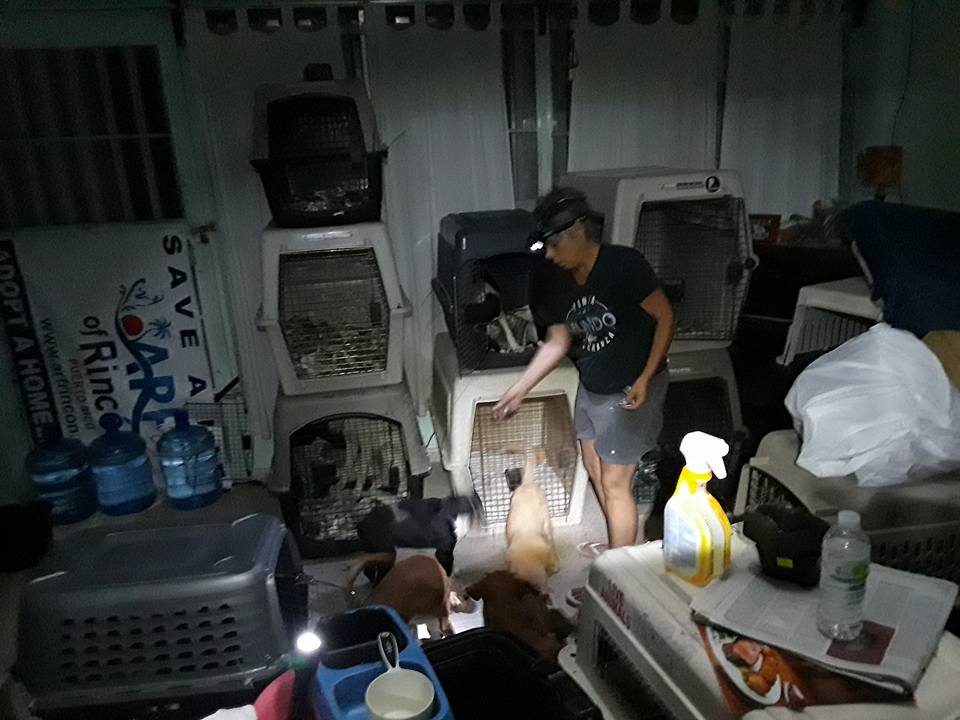
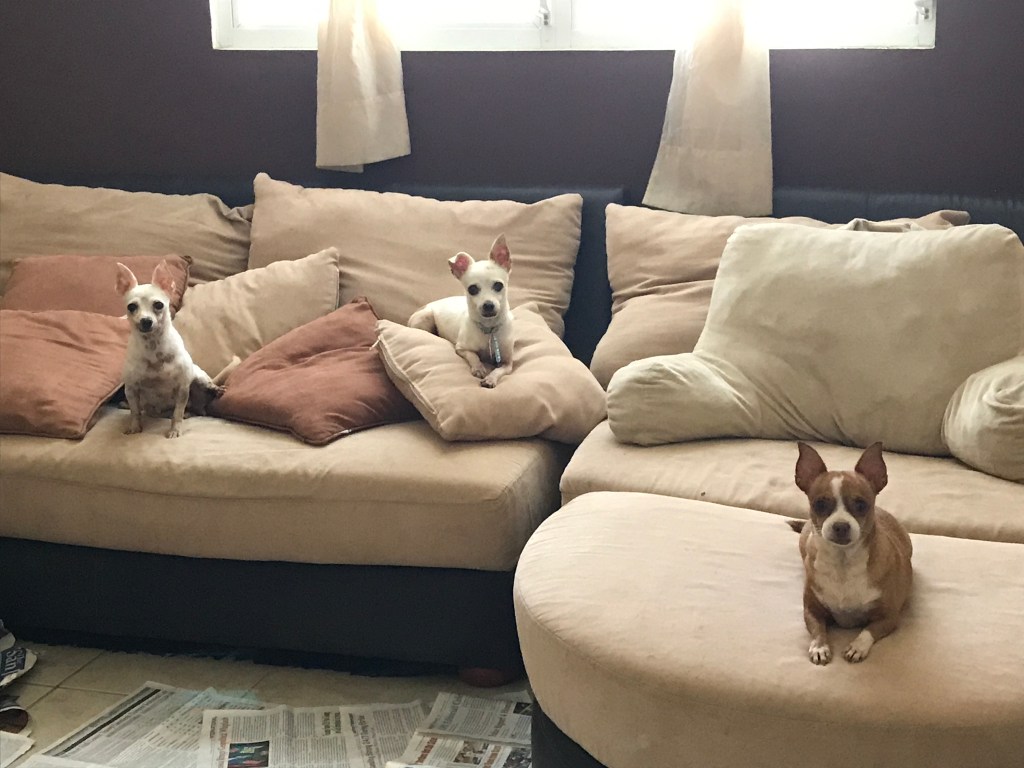
First, I think you have to understand that one of the many things we do in our organization is to find homes for stray dogs. Some of these homes are in the United States and we have partners in the mainland who are our contact with potential adopters. When Hurricane María came, we had over 20 dogs being taken care by fosters. Because we are not a shelter, those dogs are in our own homes and at the houses of other volunteers. For the hurricane, we brought all fosters inside. Besides my own pets (three dogs and two cats), I had three foster Chihuahuas and one more additional cat of a friend. Miriam Juan, ARF of Rincón’s President, had her own five dogs, a friend’s other five dogs, and over 10 foster dogs. I honestly have no idea how she managed to take care of them during the 24-plus hours that Maria stayed with us.
Miriam Juan, ARF of Rincón President, during Hurricane María.
For me, the passing of the hurricane was exhausting because it just felt like it took forever. The loss of communication meant that we had no idea where the hurricane was, how much longer it was going to take, or when it was going to be over. I saw my dogs holding it in as they are trained to do their business outside. The Chihuahuas were in a room by themselves with the floor covered in newspapers; because they were not potty-trained and they had only arrived to my house two days before, they just kept tearing off the newspapers and “having accidents” on the floor. At one point, I took my own dogs to the room with the newspapers for them to relieve themselves, but one of them, Coco – my oldest – would not go. There was a moment I found myself pleading with María just to “give me a break” as my dog really needed to go to the bathroom. Coco held it for over 30 hours.
The three Chihuahuas being fostered by Ivette.
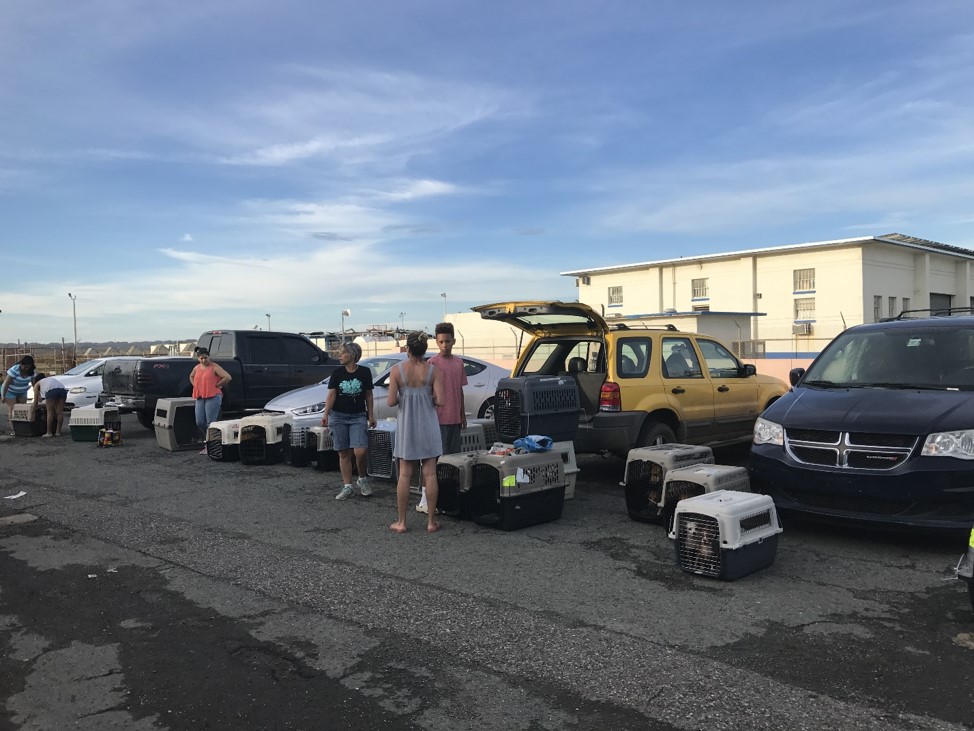
Once the hurricane passed, our only way to communicate with each other for the next few days were to go to each other houses. The kennels that we have at one of our volunteer’s property were destroyed – we knew we needed to build new ones. That also meant that all foster dogs and cats would remain inside our houses. After couple of days, some of us were able to get signal on our cellphones. Miriam was able to receive a communication from one of our partners in the USA: they said to be in the Aguadilla airport the next morning as there would be an airplane that would take all of our foster dogs to the mainland. This was our chance to send all our rescuers to safer places (and hopefully to forever homes) so we could start rebuilding. It was 9pm that day when Miriam was able to reach me; by 5am the next morning, six cars were in front of Miriam’s house loading them with kennels and dogs. Others met with us at the airport.
When we arrived to the airport, we realized that we did not have a number for the airplane flight, not even a contact information or the time of its landing. Communication was so bad that we couldn’t reach anyone. We now had to wait and pray for the airplane to arrive. The others had to leave and Miriam and I were left at the airport with only two cars and approximately 30 dogs. The plane really needed to arrive.
Arriving to the airport on October 2, 2017.
I honestly don’t remember when the plane finally landed. By then we had identified each dog and kennel with the name of the person who the dog was supposed to be send to. To our surprise, the person in charge told us that we needed to surrender the dogs as they would go to a shelter and they were not transporting them to other people. “Surrender our dogs” – the words grew heavy in me. Surrender. I still hate that word. My heart sunk. In all my years in ARF of Rincón we have never sent a dog to a shelter. I started crying and the only thing I was able to ask was “is it a non-kill shelter?” A lady, who to this day I still don’t know who she was, assured me they were not a kill shelter and that the dogs would be safe with them.
Miriam would later be criticized for our decision to surrender our foster dogs. But I completely agreed with her. It was just the two of us out there; there was no way to take the dogs back or a way to communicate with others to come back and pick them up. We didn’t have power or control over the situation. Looks like surrendering our dogs also meant that we had to surrender ourselves. And it was horrible.
To this day I don’t know what happened to the Chihuahuas that I was fostering. It has been the first and only time I didn’t receive a picture of one of my foster dogs when they arrived to their new home, with their new family. I don’t know if they were adopted together or if they were separated. I might never know. And I have to accept that.
So that’s our story. Hurricane María did not take our houses nor broke our windows – we were blessed that way. But it took something from us; it took our assurance that our foster dogs were well taken care of and, for a while, we felt powerless. María took a little bit of the hope that we had in ourselves that sometime, somehow, everything was going to be fine.
Animal Rescue Foundation of Rincón is a non-profit organization that serves the town of Rincón, Puerto Rico.
Like any other region, establishment, or organization, ARF of Rincón has been affected by the Coronavirus (Covid-19). Over a year later, things still have not return to the way we were. Although the island has started to “slowly open”, it is still very difficult to resume operations as before. Appointments with veterinarians still can take more than a month and not all airlines have resumed to pre-pandemic operations. Summer temperatures also represent a challenge, making it more difficult to open spaces for new rescues. ARF of Rincon will still try to assist people and help them in any way we can, but our resources are limited.
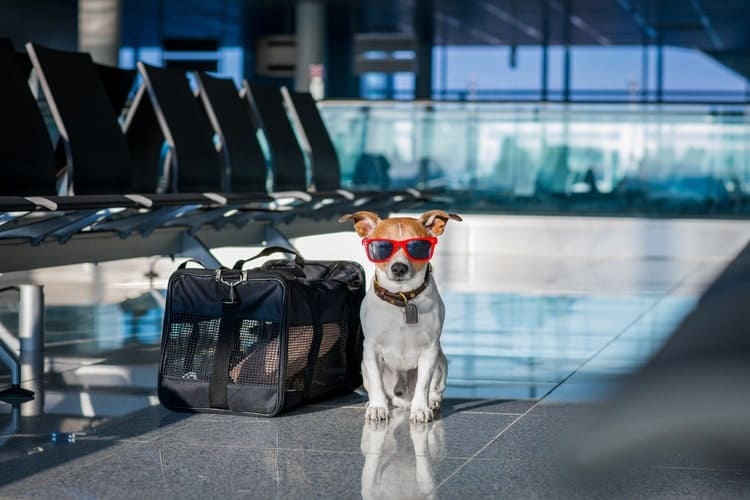
We used to send our dogs to the states using either American Airlines Cargo (from San Juan) or United Airlines (from Aguadilla). As of June 23, 2021, United Airlines’ PetSafe program indicated in its webpage that their operations are suspended. Flights from San Juan have resumed operations, but pets traveling via cargo can only do so if the temperatures are 85 degrees or less at both departure and arrival airports. Therefore, many flights are cancelled during the summer because of this requirement. Pets can travel in the cabin if they meet size requirements, which vary among airlines.
ARF of Rincon sometimes needs volunteers to take our adopted rescues to their homes in the mainland. So if you are a frequent flyer to Philadelphia, Boston, or New York and can serve as a “puppy traveler”, please let us know. All pet-related costs will be covered. Sometimes some of our rescues have to travel to Florida or other states so please visit our Facebook page and Like us so you can keep you updated.
I have been postponing writing about this. The truth is I didn’t know how to start. Then today a friend had to say goodbye to their beloved pet of 12+ years. Her pain was unbearable and I could feel it. There is no easy way… so let’s just rip off the band-aid.
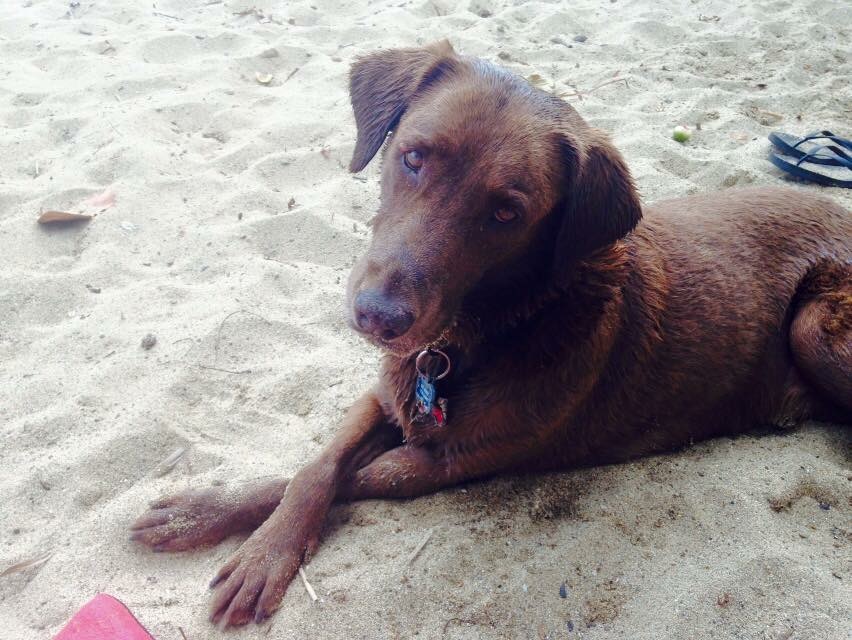
Coco was no stranger to the beach where he would say “Hi” to everybody.
When I rescued Coco the veterinary said he was between three and five years-old. I decided he was three years-old; that way in my mind he was going to stay with me for a long time. He was active, ran like the wind, and – oh – did he love the ocean. One time I was snorkeling maybe 25 feet off shore and suddenly he was next to me.
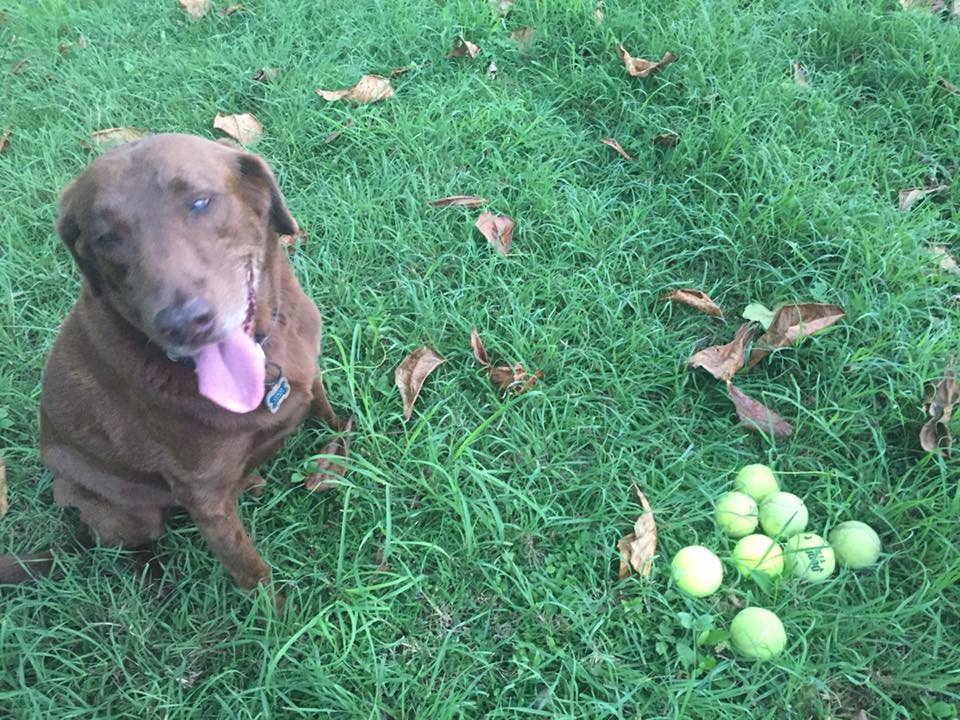
As years passed by my Coco started walking slower. My baby was not my baby anymore and Coco became an older dog. Suddenly he didn’t want to go into the ocean anymore. He weighed over 70 pounds (hey, he was a Labrador!) so putting him in the car got to be very difficult. So I bought those steps so he could get in the car and enjoy the rides… although he would not put his face out the window anymore. Coco would just lay still in the back of the car. I also noticed he would sleep most of the day, and then he started having accidents inside the house.
Finding “treasures” near the tennis courts.
What did I do? I don’t have a recipe of how to take care of older dogs – Coco was my first! I just tried my best to repay him for being “the best dog ever”. Coco basically helped me be a better rescuer; I don’t think I would have had so much success in training dogs to be better suitable for homes if it wasn’t for him. Now it was my turn to help him and to show him a lot of love. I also let him do whatever he wanted. “Oh, you want a piece of steak? There it is! Do you want to pee inside the house? Don’t worry, I will clean it. My first born? Here, you can have him!” Oh, and I kissed him. I kissed him a lot… Sometimes I think I over did it. But I knew the day was coming when I was not going to be able to kiss him anymore, so I didn’t care.
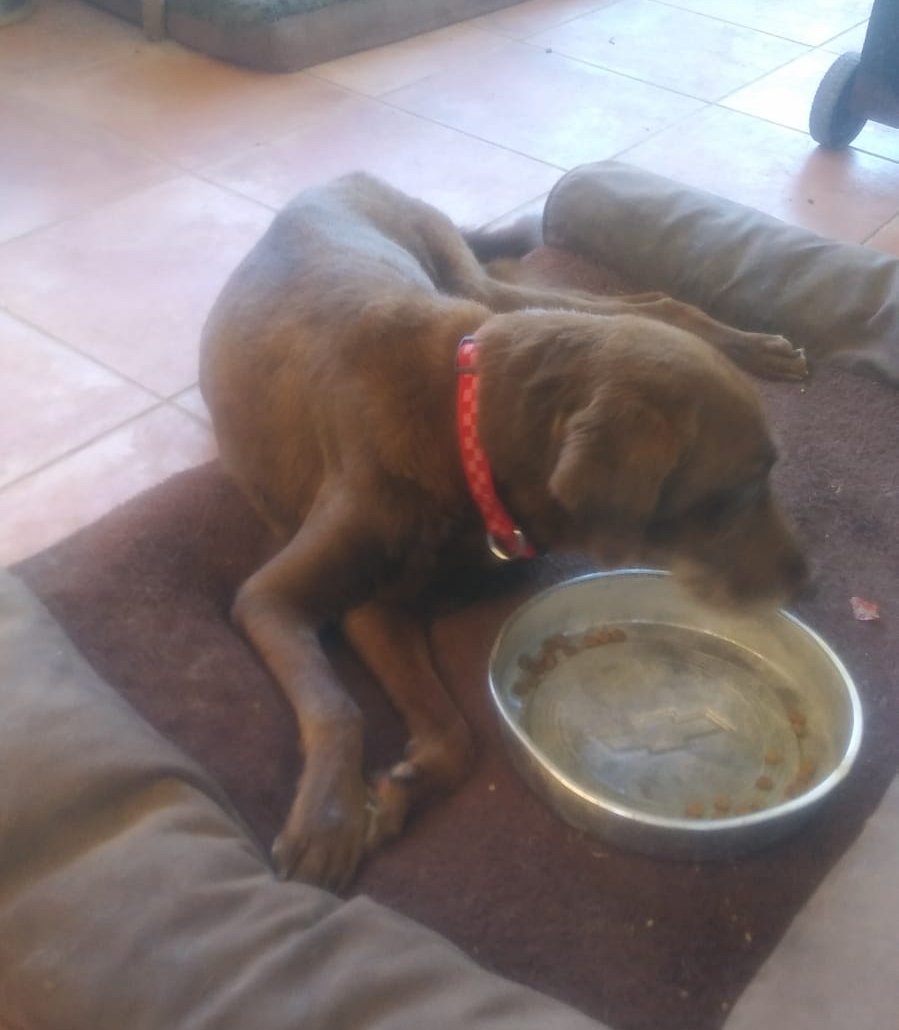
Coco’s last picture taken on August 11th, 2019.
Coco passed away on August 12th, 2019. Sadly, I wasn’t there with him to say goodbye. I was out of Puerto Rico and I remember telling him “hold on until I come back.” But he had other plans. It seems like he did one final act of saving me from the pain of seeing his lifeless body. I get to remember him smiling and wagging his tail.
So this is my goodbye to you. Thank you for being such a wonderful dog. It was an honor and a privilege to be your mom. You brought happiness into my life and I learned about unconditional love because of you. You were the best dog ever.






 ARF of Rincón